Muse vs. Dots: The AI Industry's Weirdest Rematch in Three Weeks
· Chirag Gadhvi
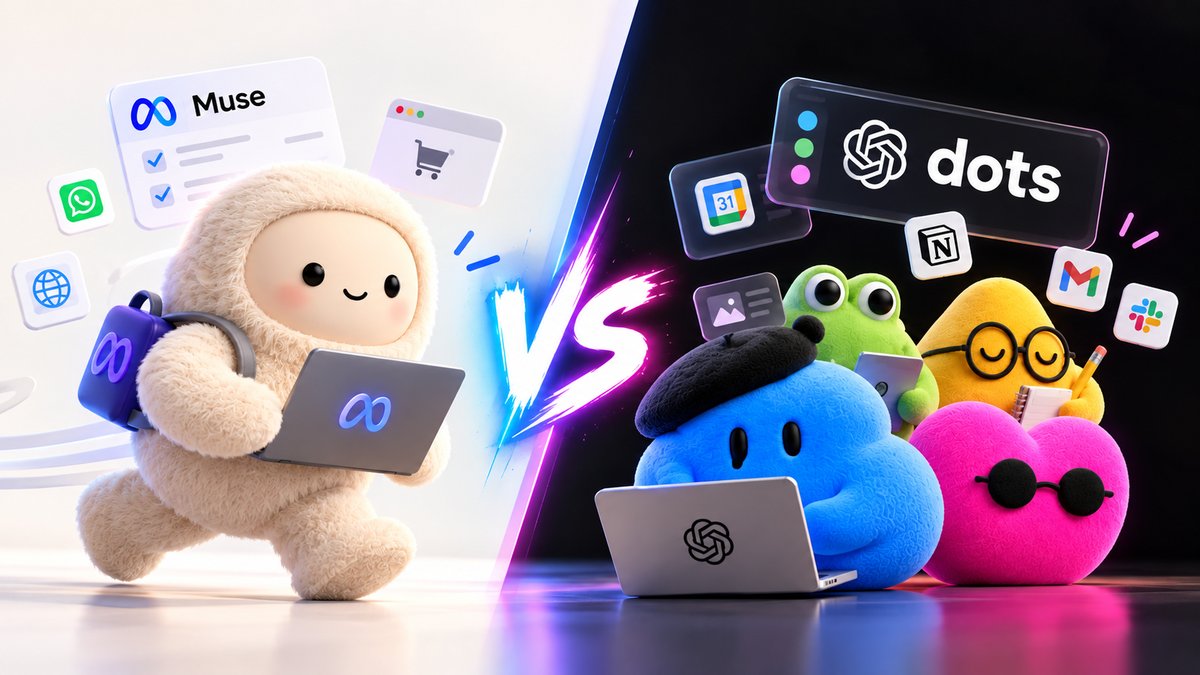
Three weeks. That's how long it took OpenAI to answer Meta's biggest consumer AI launch in years with... basically the same idea.
On September 8, Meta dropped Muse — a personal AI agent that browses, clicks, and does errands for you, built under Meta's chief AI officer Alexandr Wang:
https://x.com/alexandr_wang/status/2104925780547399986
It became the #1 free app on both app stores within two weeks. On September 29, OpenAI clapped back with dots at DevDay — an always-on agent living inside ChatGPT with its own cloud computer:
https://x.com/OpenAI/status/2104984504133918973
Same pitch, two different companies, three weeks apart. Here's how they actually stack up:
| Meta Muse | OpenAI dots | |
|---|---|---|
| Launched | Sept 8, 2026 | Sept 29, 2026 |
| Runs on | Muse Secure VM (cloud) + Mac app | Its own dedicated cloud computer |
| Model | Muse Spark family | GPT-6 Astra |
| Reach it via | Muse app, web, WhatsApp | ChatGPT, Slack, Teams, voice (SMS soon) |
| Business model | Subscription | Bundled into Pro / Business Premium |
| Personality | One mascot, "Jolly" | Customizable per-dot avatar & name |
The pitch is nearly identical — an agent that keeps working after you close the app, not just when you're actively chatting. But the drama around each has been very different.
Muse's first two weeks were rocky. Amazon banned it outright over bot-identification and credential concerns, and one user's Muse leaked his home address while negotiating a Marketplace sale on his behalf. It also came out the whole thing was built on top of an open-source project called OpenClaw — something Meta didn't exactly lead with.
Dots launched with that history fully visible in the room. OpenAI spent noticeably more of its keynote on guardrails — sensitive actions like password changes always route back to you, and every dot inherits your existing ChatGPT permissions rather than getting a blank check. Smart move, or just good marketing timing three weeks after watching a competitor eat bad press? Probably both.
The bigger story isn't really Muse or dots individually. It's that two of the largest AI companies on the planet independently concluded, within a month of each other, that the next interface isn't a chat window — it's a persistent little agent with a face, quietly working in the background. That's a real signal about where the industry thinks this is going, even if neither company nailed the execution on the first try.
So: same idea, different trust levels, different track records already. Which one would you actually let touch your calendar?